When wineries purchase glass bottles, they often face a choice: handmade machine glass bottles or assembly line glass bottles? The two production processes have significant differences in quality stability, production efficiency, cost, and applicable scenarios—choosing the right one directly affects the winery’s production schedule, product positioning, and economic benefits. As a professional glass bottle manufacturer (Linlang Glass Factory) that integrates both handmade machine and assembly line production processes, we have in-depth experience in serving wineries of different scales. Today, we will systematically analyze the core differences between the two, helping you make the most suitable choice for your bulk procurement needs.
1. Core Difference 1: Quality Consistency & Precision—Critical for Bulk Filling
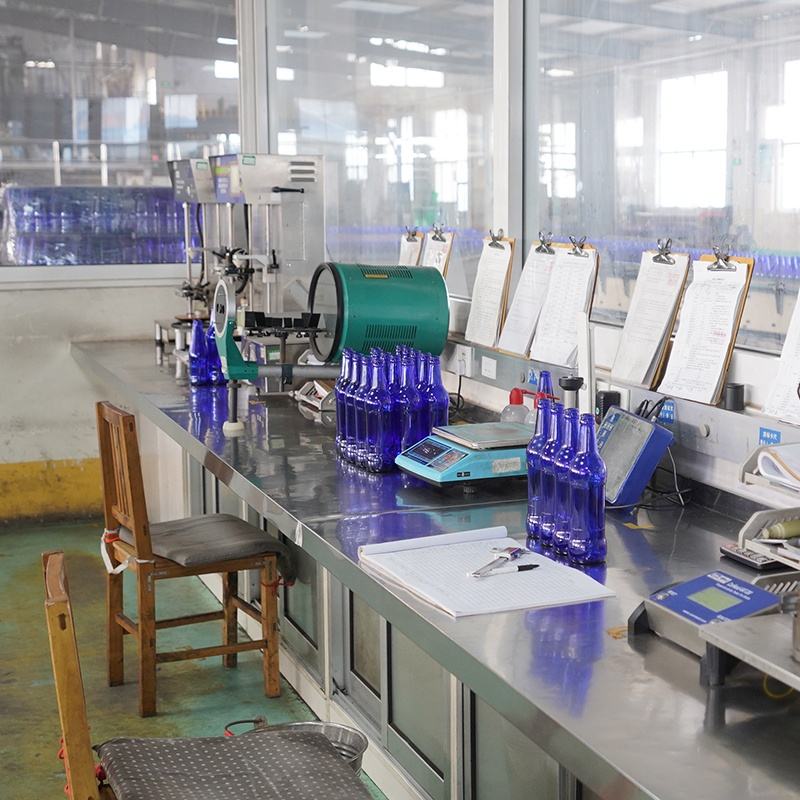
For wineries that need to use automated filling lines for bulk production, the consistency and precision of glass bottles are crucial. This is where the gap between handmade machine and assembly line processes is most obvious:
1.1 Handmade machine glass bottles: Quality varies with operation
Handmade machine glass bottles rely on manual operation throughout the forming process, so the product effect and quality will inevitably vary with different operators. The most obvious difference is reflected in the bottom of wide-mouth bottles—due to differences in manual control of material feeding and blowing force, the flatness and precision of the bottle bottom are difficult to be completely consistent. Although the quality will improve after long-term operation of a single product type, it is still impossible to achieve 100% consistency.
In addition, during the operation of the handmade machine process, problems such as misalignment, improper placement, or incomplete fitting of the wide-mouth bottle mold may occur, which will lead to large differences in the precision of the bottle mouth. For wineries, inconsistent bottle mouth sizes may cause leaks during filling, reduce filling efficiency, and even damage the filling equipment.
1.2 Assembly line glass bottles: High precision controlled by intelligent systems
Assembly line glass bottles are produced by fully automatic equipment controlled by computer CNC systems. The key parameters such as the amount of glass gob (error ≤±5g), blowing pressure, and forming time are all uniformly and accurately controlled. This ensures that every bottle in the same batch has consistent smoothness, dimensional precision, and clear and beautiful crescent lines at the bottom.
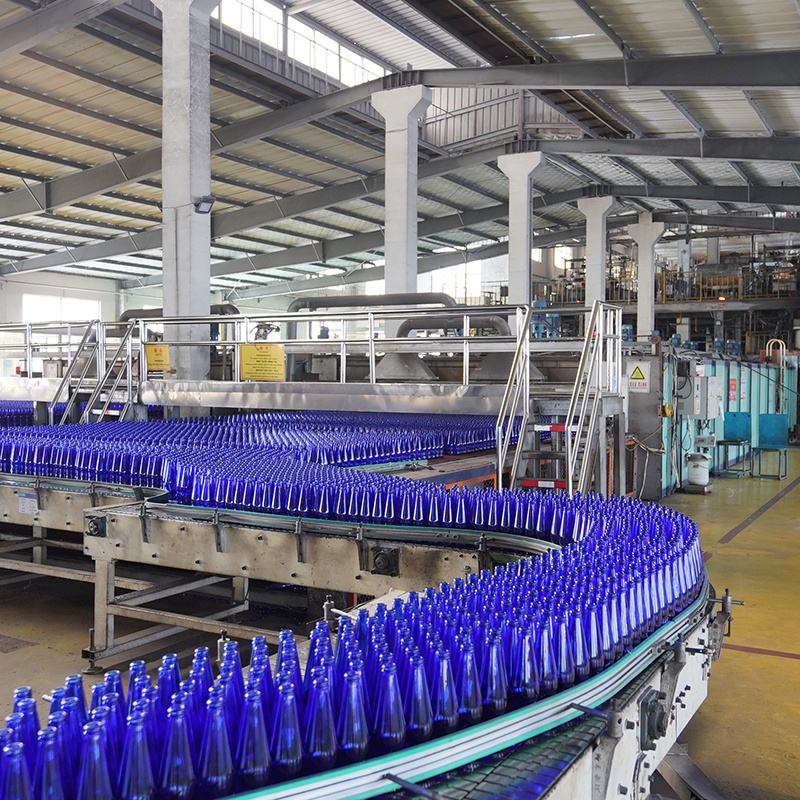
The high consistency of assembly line bottles is particularly suitable for bulk pipeline filling of containers. It can perfectly match the automated filling lines of wineries, greatly improving production capacity and output efficiency. For example, a winery using assembly line glass bottles can increase filling efficiency by 30% compared with using handmade machine bottles, and the leakage rate during filling is reduced to less than 0.01%.
2. Core Difference 2: Process Flexibility & Product Adaptability—Key for Customized Bottles
Different wineries have different needs for bottle types: some need standard batch products, while others need customized creative bottle types to highlight brand characteristics. The two processes differ significantly in flexibility:
2.1 Handmade machine glass bottles: High flexibility for customized bottle types
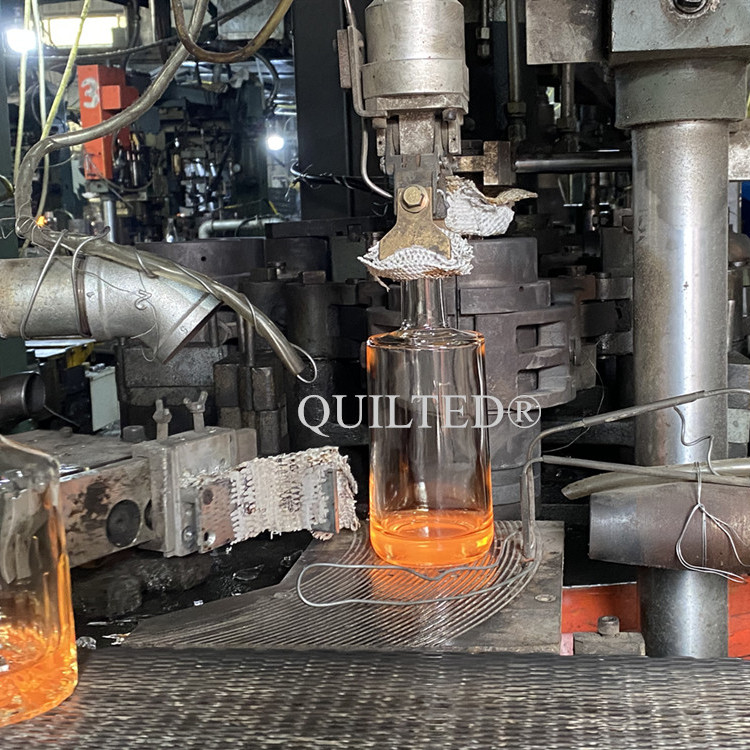
The biggest advantage of the handmade machine process is its strong flexibility. Operators can adjust the forming methods (such as blowing force, mold opening and closing speed) according to the characteristics of the bottle type, and can even produce special-shaped bottles with complex structures that cannot be achieved by assembly line equipment. For example, for wineries that need small-batch customized gift wine bottles (such as irregularly shaped brandy bottles, embossed red wine bottles), the handmade machine process can better meet the personalized needs and create unique product effects.
2.2 Assembly line glass bottles: Suitable for standard batch production
Assembly line production relies on fixed molds and automated procedures, so its adaptability to non-standard bottle types is relatively poor. Changing the bottle type requires replacing the mold and adjusting the entire production line parameters, which takes a long time and high cost. Therefore, the assembly line process is more suitable for the mass production of standard bottle types (such as 750ml standard red wine bottles, 375ml white wine bottles), which can give full play to its advantages of high efficiency and low cost per unit product.
3. Core Difference 3: Mold Control & Product Defect Rate—Affecting Long-Term Stability
The mold operation and control during the forming process directly affect the defect rate and appearance quality of glass bottles:
3.1 Handmade machine glass bottles: Defects affected by manual mold operation
Most molds of handmade machine glass bottles use manual handles for demolding. The shaping, cooling, and mold clamping lines of the glass bottles are affected by the timing of air blowing, the timing and duration of mold opening and closing. For example, if the air blowing is too early or too late, it may cause defects such as bubbles or uneven wall thickness of the bottle body; improper mold opening and closing time may lead to obvious mold clamping lines, affecting the appearance beauty.
3.2 Assembly line glass bottles: Precise mold control reduces defects
The assembly line process has precise control over the mold’s air holes, air blowing pressure, and opening and closing time. All parameters are set by the computer and executed automatically, which has little impact on product shaping. The produced glass bottles have small and neat mold clamping lines, and the defect rate (such as bubbles, cracks, uneven wall thickness) is as low as 0.05%, which is far lower than the 2-3% defect rate of handmade machine glass bottles.

4. Core Difference 4: Production Site Requirements & Order Volume Adaptability—Related to Procurement Cost
The two processes have different requirements for production sites and order volumes, which directly affect the procurement cost of wineries:
4.1 Handmade machine glass bottles: Low threshold for small-batch orders
The handmade machine process has low requirements for the production site (smaller area required) and short production line transformation time. It can flexibly meet the needs of small-batch customers (such as orders of 1,000-10,000 bottles). In addition, the mold production cycle of the handmade machine process is short (generally 3-7 days) and the cost investment is small, which is very suitable for wineries that need to test the market with new products or produce small-batch high-end customized wines. This is also one of the reasons why the handmade machine process has been popular among glass bottle manufacturers.
4.2 Assembly line glass bottles: Suitable for large-batch bulk orders
The assembly line process has higher requirements for the production site (needing a large area to place automated equipment) and has certain requirements for the order volume. Generally, it is only cost-effective when the order volume exceeds 50,000 bottles. However, for large-batch bulk orders, the assembly line process has obvious cost advantages—the more the output, the lower the unit product cost. For wineries with stable large-scale production needs (such as annual procurement volume of more than 100,000 bottles), choosing the assembly line process can significantly reduce the overall packaging cost.
5. Core Difference 5: Comprehensive Application of the Two Processes in Manufacturers
Nowadays, many professional glass bottle manufacturers (including Linlang Glass Factory) install both handmade machine and assembly line processes on the same industrial furnace. This can achieve complementary production capacity: using the assembly line process to meet the large-batch standard bottle order needs of wineries, and using the handmade machine process to undertake small-batch customized bottle orders. This not only gives full play to the production efficiency and economic benefits of the assembly line but also meets the personalized needs of different customers, maximizing the overall production benefits.
6. How Should Wineries Choose?
When choosing between handmade machine and assembly line glass bottles, wineries should make a decision based on their own product positioning, order volume, and production needs:
If you are a winery that produces large-batch standard wines (such as daily red wine, white wine) and uses automated filling lines, assembly line glass bottles are the best choice—they have high quality consistency, low defect rate, and can reduce filling costs and improve efficiency;
If you are a winery that produces small-batch high-end customized wines, gift wines, or special-shaped bottles, handmade machine glass bottles are more suitable—they have strong flexibility and can create unique bottle shapes to enhance the premium of products;
If you have both large-batch standard orders and small-batch customized needs, it is recommended to choose a manufacturer that integrates both processes (such as Linlang Glass Factory), which can simplify the procurement process and ensure the consistency of product quality.
In conclusion, there is no absolute advantage or disadvantage between handmade machine and assembly line glass bottles. The key is to match the winery’s own production and operation needs. If you have more questions about glass bottle procurement (such as customized bottle type design, batch price consultation), please contact Linlang Glass Factory—we will provide you with professional one-stop solutions based on your specific needs.
Post time: Nov-29-2025