In the packaging industry, the quality of glass bottles directly relates to product safety, storage effect, and brand reputation. Many purchasers and brands often encounter glass bottles with poor quality in the market, which brings potential risks to their products. As a professional Chinese foreign trade factory specializing in custom glass bottle export, QLT Glass has rich experience in glass bottle production and quality control. Today, we will share practical tips on how to judge the quality of glass bottles, helping you effectively identify superior and inferior products and choose reliable packaging solutions.
To judge the quality of white glass bottles (especially glass wine bottles, which are widely used), we can start with the appearance inspection, focusing on the shape, bottle mouth, bottle bottom, and seam of the bottle body. This is the most direct and simple way to screen out unqualified products.
1. Inspect the Appearance and Shape of the Bottle Body
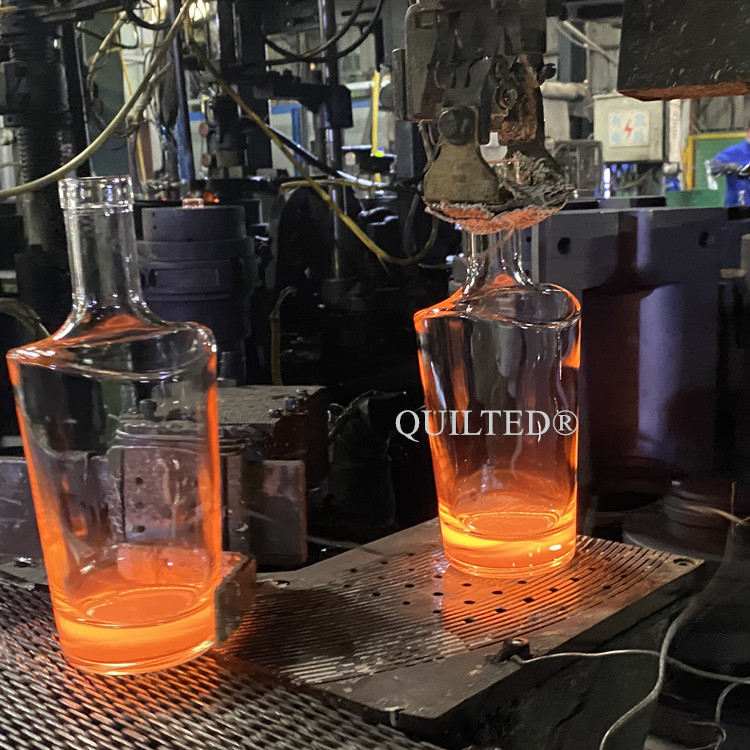
First, observe whether the glass bottle body is deformed or tilted. A high-quality glass bottle should have a regular shape, with no obvious distortion in the bottle body and a vertical overall posture. Then, check whether the bottle mouth is neat and smooth—an uneven or rough bottle mouth will affect the sealing performance, leading to leakage of the contents. In addition, pay attention to the bottle bottom: there should be no obvious protrusions or depressions. Such defects will not only affect the stability of the bottle when placed but also may be caused by improper molding technology, indicating potential quality problems. At the same time, observe the seam of the bottle body: the seam should be tight and uniform, with no gaps or excessive thickness. If the seam is separated or too thick, it means the molding process is not up to standard, and such glass bottles are easy to break during transportation or use. QLT Glass strictly controls the appearance quality of each bottle; our automatic molding equipment ensures the regularity of the bottle shape, and professional inspectors check each bottle one by one to eliminate products with appearance defects.
2. Check the Glass Material and Internal Quality
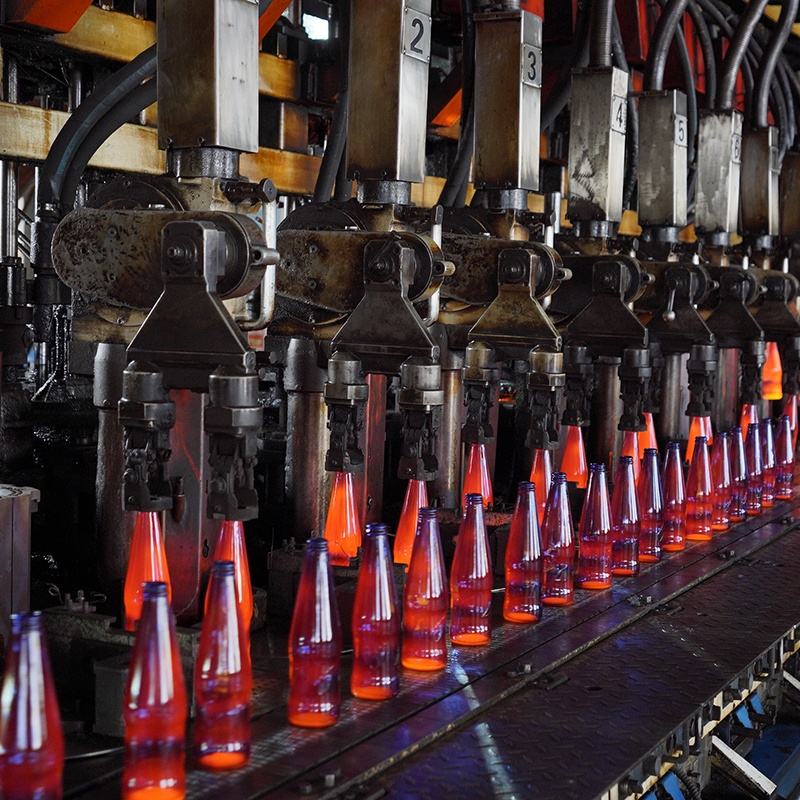
Next, carefully observe the glass material of the bottle body. A high-quality glass bottle should be transparent and clean, with no obvious bubbles, impurities, cracks, or dark spots inside. Bubbles and impurities in the glass indicate that the raw materials were not fully melted during the production process, while cracks and dark spots may be caused by improper cooling technology. These defects not only affect the aesthetic appearance of the glass bottle but also have potential safety hazards—cracks may expand and break under external force, leading to leakage of the contents (especially for liquids such as wine and medicine). QLT Glass uses high-purity quartz sand and food-grade raw materials, and adopts advanced melting and cooling technology to ensure that the glass material is transparent and pure, with no bubbles or impurities, and meets international safety standards such as FDA and LFGB.
3. Judge by Bottle Thickness and Sound
In addition to appearance and material, the thickness and weight of the bottle body are also important indicators to judge the quality of glass bottles. If the bottle body is too thin and the weight is too light, its impact resistance and pressure resistance will be poor, and it is easy to break during transportation and use, indicating that the quality of the glass bottle is inferior. On the other hand, a high-quality glass bottle should have a uniform thickness and an appropriate weight, ensuring sufficient strength. You can also judge the quality by tapping the bottle body: if the sound is clear and crisp, like a silver bell, it means the raw materials used for production are of excellent quality, and the melting and molding processes are up to standard; if the sound is thin, brittle, and dull, it proves that the quality of the glass bottle is unqualified, and there may be internal defects or impure raw materials. QLT Glass strictly controls the thickness of the bottle body, with a thickness error within ±0.1mm, ensuring that each bottle has sufficient strength and stability, and the sound is clear and crisp when tapped.
Judging the quality of glass bottles is not complicated as long as you grasp the above three key points. As a professional glass bottle exporter, QLT Glass adheres to the principle of “quality first”, and every link from raw material selection, production, to quality inspection is strictly controlled. We can provide you with high-quality glass bottles that meet your needs, and also provide professional quality inspection guidance to help you avoid the risk of buying inferior products. Whether you are purchasing glass wine bottles, pharmaceutical bottles, or daily chemical packaging bottles, QLT Glass is your reliable partner. Contact us today to learn more about our quality control system and product advantages.
Post time: Jan-11-2026