Transforming a bespoke spirits bottle from an initial industrial design sketch into commercial mass production is one of the most critical packaging investments a distillery or brand owner will undertake. A truly bespoke glass container delivers distinctive shelf presence, proprietary brand equity, and powerful anti-counterfeiting barriers. However, turning a creative 2D concept into a robust glass container that runs smoothly on high-speed filling lines requires a disciplined, step-by-step engineering methodology.
Executive Summary: The 5-Stage Custom Bottle Development Workflow
Developing custom glass liquor bottles is a sequential stage-gate engineering process spanning 10 to 16 weeks from concept brief to warehouse delivery. Successful projects follow five defined milestones:
- Stage 1: Design Brief & 3D Engineering (Weeks 1–2): Converting 2D creative concepts into parametric 3D CAD files, draft angle checks, and 2D general arrangement (GA) drawings.
- Stage 2: 3D Prototyping & Physical Ergonomics (Weeks 2–3): Producing 1:1 scale resin models to verify hand-feel, volume balance, center of gravity, and label panel flatness.
- Stage 3: Pilot Sampling Mold & Glass Proofing (Weeks 4–7): Cutting single-cavity sample tooling, blowing pilot bottles in real super flint glass, and executing dimensional and filling line trials.
- Stage 4: Full Multi-Cavity Production Tooling (Weeks 8–11): Fabricating complete IS machine mold sets and completing the commercial container manufacturing run.
- Stage 5: Surface Decoration & Protective Packaging (Weeks 11–13): Applying screen printing, spray coating, or ceramic decals, followed by AQL final inspection and palletized container shipping.
Whether launching a luxury bourbon in an Alex Supreme Decanter profile or creating an ergonomic gin flask, understanding the technical deliverables and approval gates at every milestone ensures your custom project stays on budget and on schedule.

Stage 1: Creative Concept to 2D Engineering Drawings (Weeks 1–2)
Every custom bottle project begins with a creative brief. While industrial designers focus on aesthetic lines, brand storytelling, and visual weight, glass packaging engineers must translate artistic visions into manufacturable realities. Molten glass behaves like a viscous fluid that must expand under compressed air inside cast iron or bronze alloy molds. Without rigorous engineering parameters, aesthetic concepts can suffer from poor wall thickness distribution, structural thermal stress, or mold release lock-up.
Critical Engineering Parameters in 2D GA Drawings
During the initial engineering phase, the glass factory’s CAD team creates a comprehensive 2D General Arrangement (GA) drawing. This technical document establishes the baseline specifications for tooling fabrication:
- Nominal vs. Brimful Volume: For a standard 750ml or 700ml spirit bottle, the brimful capacity is engineered with a specific expansion headspace (typically 3% to 5% overfill capacity) to comply with international filling regulations and prevent hydraulic hydrostatic pressure spikes during temperature fluctuations.
- Draft Angles (Taper): Vertical walls must incorporate a minimum draft angle (typically 0.5° to 1.5°) so the blown glass container can release cleanly from the mold halves without scuffing or dragging against the metal cavity.
- Radius and Corner Fillets: Sharp 90-degree internal corners create severe stress concentrations in hot glass. Engineers introduce generous transition radii (minimum 3.0mm to 5.0mm) to ensure uniform molten glass flow and prevent structural failure during transit or capping.
- Push-up (Punt) Geometry: Heavy-base spirits bottles require a precisely engineered concave base profile (punt) to ensure table stability, eliminate rocking caused by thermal base crowning, and optimize base glass distribution.
- Neck Finish Specifications: The neck bore must be dimensioned to match exact closure types, defining critical dimensions (T for thread OD, E for thread wall OD, I for inner bore diameter, and H for finish height) for bar-top synthetic corks, GPI continuous threads, or ROPP aluminum caps.
Gate 1 Sign-Off: Never authorize mold cutting based solely on a 3D rendering. Production tooling must only proceed after the brand and engineering teams have formally reviewed and signed off on the 2D General Arrangement (GA) drawing with complete dimension tolerances.
Stage 2: 3D CAD Solid Modeling & Physical Prototyping (Weeks 2–3)
Once the 2D technical drawings are established, engineers generate a solid 3D CAD model (STEP or IGES format). This digital solid model calculates exact volumetric capacity, estimated glass mass, center of gravity, and wall thickness gradients. Before committing several thousand dollars to metal mold machining, creating physical scale models provides invaluable physical validation.
Physical Mockup Verification Checklist
Modern rapid prototyping utilizes high-precision SLA 3D printing (transparent resin or high-density acrylic) to fabricate 1:1 scale physical replicas. These physical models allow brand managers and packaging engineers to evaluate key handling criteria:
- Ergonomics & Hand Pouring: Testing the bottle’s grip diameter, neck length, and center of balance when held by bartenders, retail staff, and consumers.
- Physical Closure Fitting: Inserting sample synthetic bar-top stoppers or trial closures into the 3D printed neck to confirm visual proportion, neck flare aesthetics, and closure grip height.
- Label Panel Contour Check: Applying preliminary paper labels to flat or cylindrical panels to verify that labeling areas remain free from compound curves that could cause wrinkling or bubbling.
- Secondary Carton & Shelf Fit: Placing the 1:1 model inside prototype gift boxes, shelf displays, and outer shipping master cartons to confirm external clearance and pallet footprint efficiency.
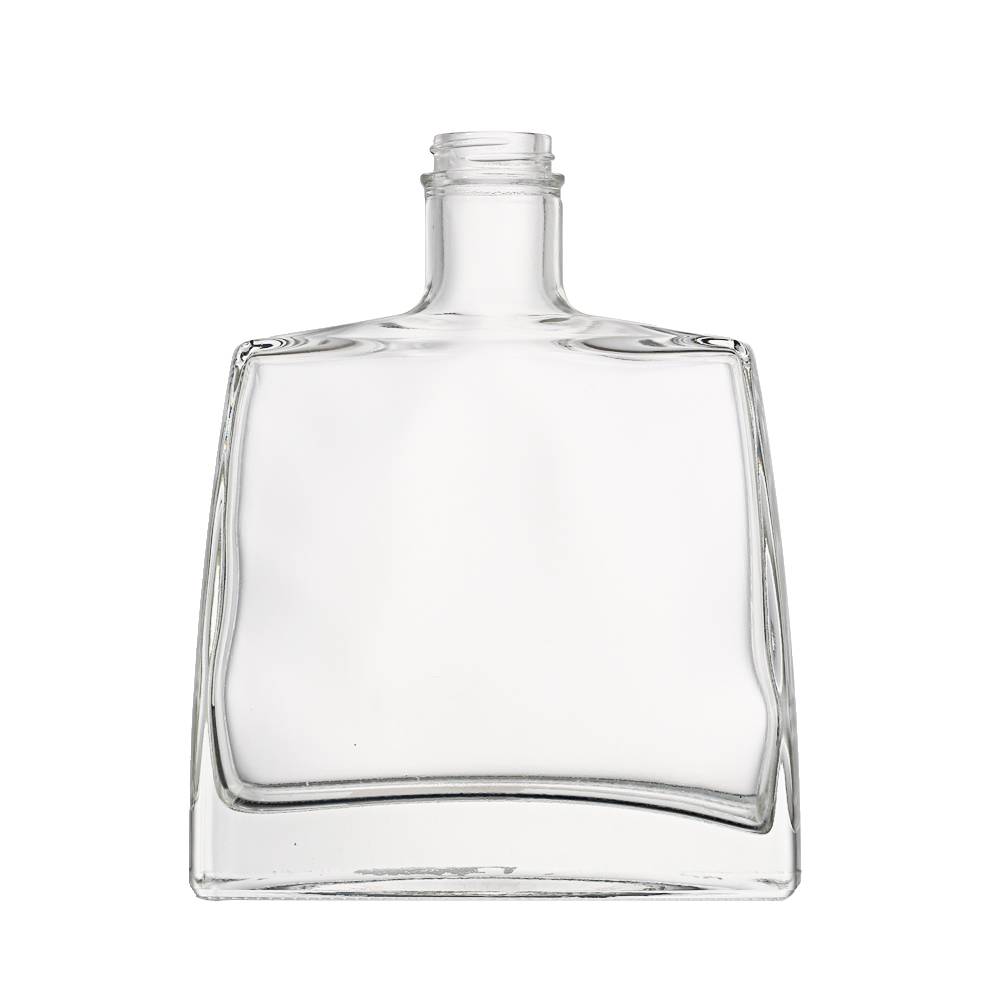
Stage 3: Single-Cavity Pilot Mold & Glass Sampling (Weeks 4–7)
While 3D resin mockups confirm shape and ergonomics, they cannot simulate the optical clarity, thermal contraction, and structural dynamics of real molten glass. For bespoke bottle geometries, manufacturing a single-cavity pilot mold (sampling mold) is the definitive step to validate glass quality before mass fabrication.
Why Invest in a Pilot Sampling Mold?
A pilot sampling mold consists of a single set of blank molds, blow molds, neck rings, and bottom plates fabricated from cast iron or aluminum-bronze alloy. The factory mounts this single cavity onto a production Individual Section (IS) machine to blow a trial run of 50 to 500 real glass bottles using production-grade Super Flint glass.
This sampling trial enables comprehensive laboratory and mechanical testing:
- Annealing Quality & Stress Analysis: Inspecting trial bottles under cross-polarized light (polariscope) to ensure residual thermal stresses meet ASTM C148 standards (Real Temper Number $\le$ 3).
- Internal Burst Pressure Testing: Subjecting containers to hydraulic pressure ramps (ASTM C147) to ensure adequate structural safety margins for high-proof spirits and cork insertion pressure.
- Thermal Shock Resistance: Verifying that containers withstand rapid temperature differentials ($\Delta T \ge 42^\circ\text{C}$) without micro-fracturing (ASTM C149).
- Actual Filling Line Trials: Running 50 to 100 sample bottles through the distillery’s rotary rinsers, counter-pressure or vacuum filling nozzles, automatic capping chucks, label applicators, and case packers to confirm seamless automation compatibility.
Gate 3 Sign-Off: Once physical glass samples pass laboratory quality control and filling line mechanical trials, the buyer signs off on the “Golden Sample.” This physical signed bottle becomes the immutable quality baseline for mass production inspection.
Stage 4: Multi-Cavity Production Tooling & Mass Manufacturing (Weeks 8–11)
Following Golden Sample approval, the tooling engineering shop machines the full production mold set. A commercial glass furnace runs multi-section Individual Section (IS) machines (such as 6-section, 8-section, or 10-section configurations, often in double-gob or single-gob operation). For an 8-section double-gob machine, the toolmaker fabricates 16 complete sets of synchronized molds, including blank molds, finish neck rings, blow molds, baffles, guide rings, and bottom push-up plates.
| Development Stage | Primary Engineering Activity | Key Buyer Deliverables | Approval Gate Milestone |
|---|---|---|---|
| Stage 1: Engineering CAD | Convert 2D design to parametric 3D CAD; calculate brimful volume, draft angles, and glass weight. | Brand design sketches, closure specs, filling line speed. | Gate 1: 2D GA Drawing Sign-off |
| Stage 2: 3D Prototyping | 3D SLA resin printing of 1:1 physical mockups; evaluate grip ergonomics and closure proportions. | Physical closure samples, preliminary label layout. | Gate 2: Physical Model Approval |
| Stage 3: Pilot Sampling Mold | Fabricate single-cavity sample mold; blow 50–500 real glass bottles; execute lab and filling trials. | Filling line trial feedback, closure torque verification. | Gate 3: Golden Sample Sign-off |
| Stage 4: Mass Production | Machine full multi-cavity IS mold sets; continuous furnace campaign melting and automated forming. | Confirmed purchase order, approved delivery schedule. | Gate 4: Cold-End AQL QC Inspection |
| Stage 5: Decoration & Logistics | Apply screen printing, frosting, spray coating, or ceramic decals; pack into partitioned cartons. | Final approved vector artwork, Pantone color targets. | Gate 5: Pre-Shipment Release & CoA |
Continuous Furnace Melting and Automated Quality Control
During mass production, high-purity raw silica sand, soda ash, and refining agents melt continuously inside regenerative furnaces at 1500°C. High-speed optical cameras, laser wall-thickness gauges, and check-finish sensors inspect 100% of manufactured containers at the cold-end of the annealing lehr. Bottles with dimensional deviations, inclusions, stones, or neck cracks are automatically rejected back into the cullet stream.

Stage 5: Secondary Surface Decoration & Palletized Packaging (Weeks 11–13)
Once base glass production is complete, containers destined for bespoke decoration transfer to secondary processing workshops. Value-added surface finishes elevate brand prestige and create unforgettable tactile appeal on retail shelves:
- Ceramic Screen Printing & Decal Firing: Applying inorganic mineral inks and decals cured in high-temperature lehrs (580°C to 620°C), fusing the graphic directly into the glass surface for permanent, dishwasher-safe durability.
- Full-Body & Gradient Spray Coating: Applying organic matte, gloss, or translucent color gradients with automated electrostatic spray nozzles, creating striking colored glass aesthetics.
- Acid Etching & Satin Frosting: Immersing containers in controlled acid chemical baths to produce a soft, silky satin frosted texture with high light-diffusing properties.
- Hot Foil Stamping & Precious Metals: Transferring real 24k gold, platinum, or metallic foils to highlight luxury brand crests and vintage badges.
Secondary Packaging & Ocean Freight Protection
To ensure decorated and pristine glass containers arrive at the bottling facility without transit scuffing, glass manufacturers utilize custom engineered secondary packaging. Bottles are packed into heavy-duty corrugated cartons fitted with full-height corrugated partitions (dividers) that prevent glass-to-glass contact. Cartons are loaded onto heat-treated, fumigated wooden pallets (ISPM-15 compliant), cross-banded with high-tension strapping, and wrapped in multilayer stretch film with protective moisture-resistant top caps.
Frequently Asked Questions (FAQ)
1. How long does the entire custom spirits bottle development process take?
A typical bespoke glass container project takes between 10 to 16 weeks from initial concept brief to port shipment. This includes 2 weeks for 2D/3D engineering design, 3 to 4 weeks for sample mold fabrication and glass pilot blowing, 4 to 5 weeks for full multi-cavity mold cutting and mass glass production, and 2 to 3 weeks for secondary decoration and palletized packing.
2. What is the difference between a sample mold and a production mold?
A sample mold is a single-cavity tooling set used exclusively to produce small test batches (50 to 500 bottles) for physical verification, volumetric testing, and filling line trials. A mass production mold set consists of multiple synchronized cavities (typically 6 to 16 sets) engineered to run continuously on automated IS manufacturing machines at commercial scale.
3. Can I skip the pilot sampling mold phase to save time and tooling budget?
While skipping the pilot mold can shave 3 to 4 weeks off the schedule, it carries significant commercial and engineering risk. If volumetric capacity, neck bore tolerances, or draft angles require post-production adjustments, modifying full multi-cavity production tooling is exponentially more expensive and can cause massive launch delays. Pilot molds are strongly recommended for all new proprietary geometries.
4. Who owns the custom mold tooling once the mold fee is paid?
Under standard international custom glass manufacturing contracts, the buyer holds exclusive proprietary ownership of the custom mold design and tooling after paying the tooling fee. The manufacturing plant stores, cleans, lubricates, and maintains the mold set in dedicated tooling vaults, using it exclusively for the buyer’s authorized production runs.
5. What key files and data must I provide to initiate a custom bottle project?
To kick off a custom bottle project, provide: (1) 2D vector sketches or 3D concept renderings, (2) target nominal capacity (750ml, 700ml, etc.), (3) closure type and neck finish specification, (4) preferred glass color grade (Super Flint, High Flint, Amber), (5) estimated target bottle weight, (6) filling line conveyor speed and automated handling constraints, and (7) projected annual container volume.
Ready to Engineer Your Bespoke Spirits Bottle?
From initial design sketches and 3D prototyping to pilot glass sampling and full container production, PackagingGlass provides turnkey custom bottle engineering services. Explore our Custom Bottle Design Services, request a physical Bottle Sample Kit, or submit your design drawings for a detailed engineering review via Request a Quote.
Post time: Oct-10-2026