Having a uniform thickness is one of the ideal goals for the forming operation of glass liquor bottles. For pressed glass liquor bottles, the forming of the bottle body and the bottle mouth is forced by the shape of the mold. However, unlike the fixed mold boundary layer used in blow-molded glass liquor bottles, the compressed air or vacuum used is elastic. Whether the thickness of the container can be uniform is related to the temperature in the parison and the distribution of the glass material, depending on whether they are consistent with the progress of the forming operation. Therefore, in the automatic forming operation of glassware using compressed air or vacuum, these two parameters must be accurately coordinated. First, the temperature of the gob must be uniform, and the glass material must be evenly distributed in the forming mold, which is the requirement for the uniform wall thickness distribution of the product. Below, we will understand the reasons for the uneven wall thickness of glass bottles in glass bottle manufacturers.
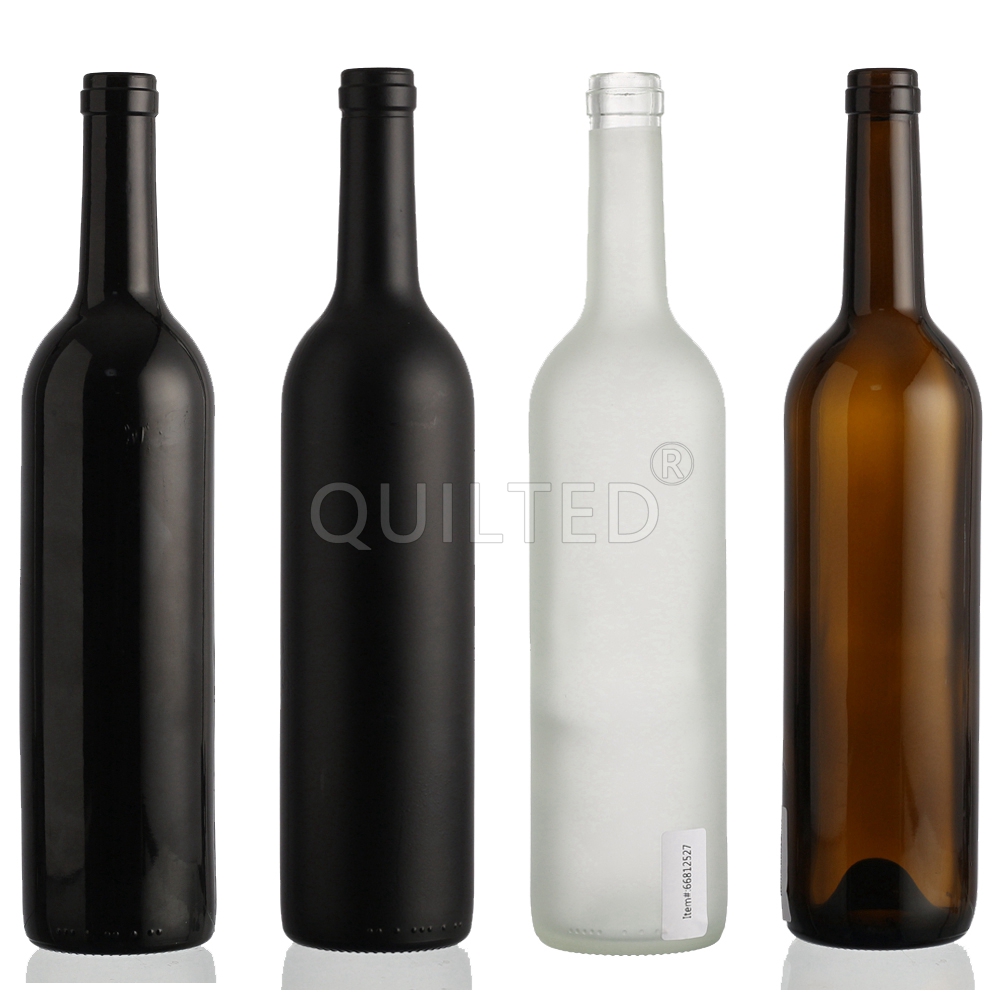
1. Thin Shoulders of Glass liquor Bottles
Some parts of the shoulders of glass liquor bottles are too thin to meet the required specifications. The common reasons for the thin-wall defect of the bottle shoulders are that the corresponding part of the parison is not properly cooled or lubricated, resulting in excessively high temperature, or the start time of positive blowing is too late, leading to excessive stretching of the parison. QLT Glass pays special attention to the temperature control and lubrication of the parison during the production process, and accurately controls the start time of positive blowing to avoid thin shoulders and ensure that the thickness of each part of the bottle shoulder meets the standard.
2. Thin Body of Glass liquor Bottles
This defect mainly refers to the situation where the wall thickness of the glass liquor bottle body is partially or completely less than the standard required thickness. The common reasons are that the reheating time of the original parison is too long, the start time of positive blowing is delayed, which may also lead to uneven wall thickness of the glass liquor bottle. In addition, improper use of mold coating, dirty molds, resulting in large temperature differences in various parts of the forming mold or inappropriate cooling of the forming mold, can also cause this defect. QLT Glass strictly standardizes the use of mold coating, regularly cleans and maintains the mold, and controls the temperature of the forming mold uniformly to avoid uneven wall thickness of the bottle body.
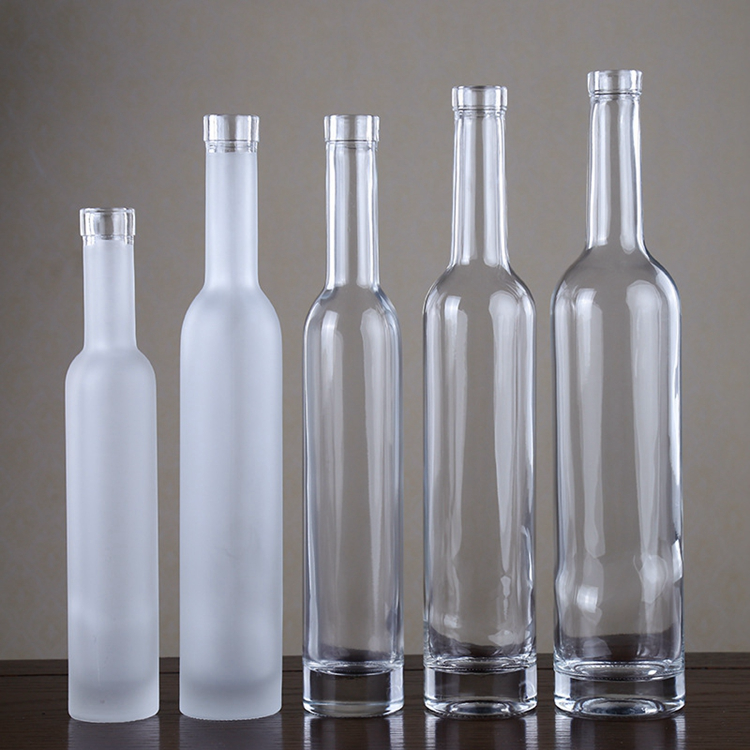
3. Thin Bottom of Glass liquor Bottles
The thickness of the bottom of the glass liquor bottle fails to meet the standard specifications. There are many possible reasons for this: too long contact time with the initial mold, insufficient reheating time, too low parison temperature, and poor glass stretching; too early start of reverse blowing or too long reverse blowing time, resulting in insufficient reheating of the bottle neck; too early start of positive blowing or too long positive blowing time; or inappropriate timing of the plunger (mandrel). QLT Glass optimizes the parameters of each link in the forming process, accurately controls the contact time of the initial mold, the reheating time, and the timing of blowing and plunger, ensuring that the thickness of the bottle bottom meets the standard requirements.
As a professional Chinese foreign trade factory specializing in custom glass liquor bottle export, QLT Glass has rich experience in solving the problem of uneven wall thickness. We integrate advanced production equipment and strict process control, accurately control every parameter in the forming operation, and effectively avoid the defects of thin shoulders, thin bodies, and thin bottoms of glass liquor bottles. Our professional technical team continuously optimizes the production process, conducts strict quality inspections on each batch of products, and ensures that every glass liquor bottle has uniform wall thickness and stable quality. If you have more questions about the production quality of glass liquor bottles, feel free to contact QLT Glass for professional answers and solutions.
Post time: Feb-08-2026